Complexity is the currency of the modern financial business. Wall Street rewards investors with a sense that investing needs higher-tech algorithms, ubiquitous observation, and hefty advisory fees. But for the average investor, the most powerful wealth-building device is surprisingly easy: the index fund. It takes all the mystery out of index fund investing and offers a clear trail to build a seven figure portfolio with as little to no work and as much efficiency as possible.
What Is the Index Fund Revolution?
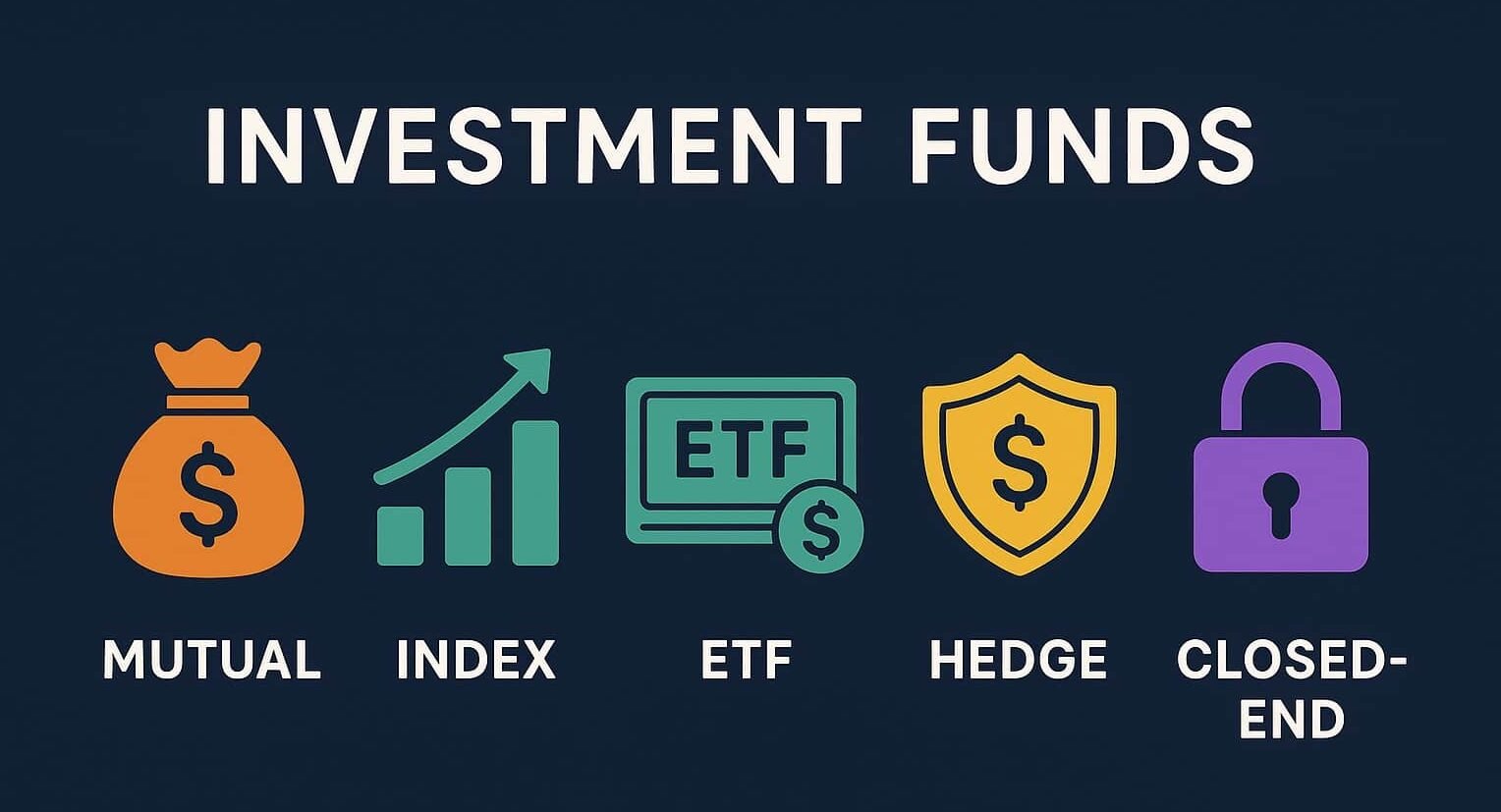
Such an exchange-traded fund (ETF), index fund, is a mutual fund or exchange-traded fund tailored to mimic the performance of a particular market baseline. Instead of having a fund manager select individual stocks (an approach that, over long periods of time, does not beat the market 80-90 percent of the time), they mechanically own every company in a specific index. By buying a S&P 500 index fund, you are buying fractional ownership in 500 of the biggest companies in America (Apple, Microsoft, Coca-Cola and J&J).
This approach was introduced by John Bogle, who founded Vanguard in 1975 and began with the first retail index fund. Bogle saw a math truth that still holds today: When you take fees and taxes into account, the average actively managed fund ought underperform the market average because you and your investors are the market.
Index funds avoid stock picking, market timing and increased portfolio turnover to capture market returns while bringing costs down to nearly zero. The philosophy behind index investing is eternally simple, elegant. Markets reward patient capital. The U.S. stock market has never returned negative profits over the course of a rolling 20-year period. Even when individual companies fail, migrate overseas or become irrelevant, the collective creativity of capitalism rises. Index funds give you ownership of the entire orchard, rather than wagering on individual trees.
Why Index Funds Rule in Active Management
The evidence for index investing isn’t academic — it is empirical and daunting. Standard & Poor’s consistently publishes the SPIVA Scorecards, which benchmark active managers against their own benchmarks. More than 85 percent of active fund managers consistently lose out to their respective index in 15 years.
This underperformance isn’t manager incompetence; it’s structural. Active funds will charge 0.50%–2.00% in annual expense ratios for their fees, trade regularly generating tax obligations, and must keep cash reserves for redemption – leading to a “cash drag”.
In math terms: A $100,000 investment at 8% annual growth over 30 years becomes $1,006,265. Cut a 1% annual fee out of that money and the total comes to $761,225. So that “minimal” 1% charge added up to $245,000 — a little over a quarter of your nest egg.
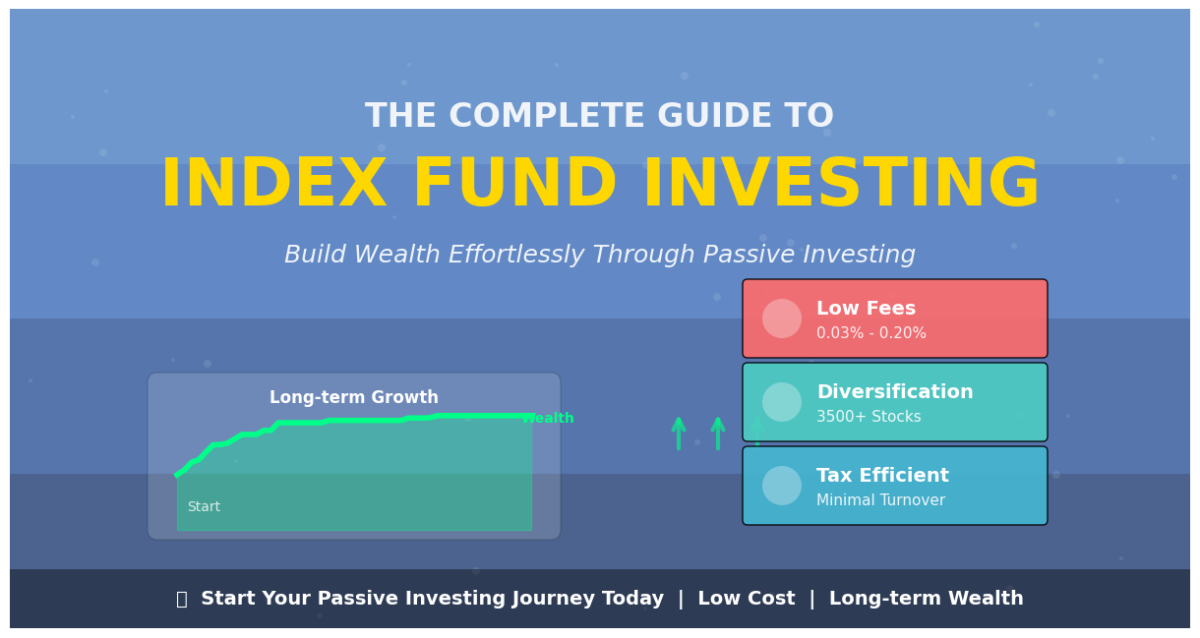
Top index funds offer providers including Vanguard, Fidelity, Schwab and other names, charge between 0.03% and 0.20%, holding the equivalent of almost the complete market return for investors.
Another secret advantage is tax efficiency. Since index funds trade securities only when the indices change (almost never), they produce little taxable capital gains distribution. In taxable brokerage accounts, that deferral means that funds compound a little longer before Uncle Sam takes his equity interest. Active funds, which have turnover rates going beyond 50% a year, distribute taxable gains indefinitely even if you haven’t sold a share.
Making a Portfolio for Your Index Fund
Core Holdings: Exposure to Total Market
Start with a Total Stock Market Index Fund (think VTSAX at Vanguard, FZROX at Fidelity, SWTSX at Schwab), and the others. Such funds may hold as many as 3,500-4,000 U.S. stocks of all types (with varying sizes of capitalization), giving exposure in macro stability (large-cap), micro growth (mid-caps) and small caps. There’s an additional fund for instant diversification across all sectors, industries with everything they can get.
For international exposure – Add a Total International Stock Index Fund (VTIAX or FTIHX) to your equity portfolio, aiming to capture an increase of 20-30%. This accounts for growth in developed markets such as Europe and Japan and emerging economies like India and Brazil. And currency fluctuations and different economic cycles mean international stocks invariably zig when domestic markets zag, dampening the volatility of the overall portfolio.
Bond Allocation: Anchoring for Stability
Your relative age and risk tolerance shape your percentage of bonds. You subtract your age from 110 to calculate your stock allocation; the balance goes to bonds. At 30, keep 80 percent stocks and 20 percent bonds. A Total Bond Market Index Fund (VBTLX or FXNAX) offers exposure to thousands of government and corporate bonds and provides revenue and ballast in the event of a decline in the stock market.
ETFs vs. Mutual Funds
ETFs (Exchange-Traded Funds) are traded like stocks during the day; mutual funds are traded once a day after market close. With automatic monthly fund buying, mutual funds allow for buying even exact dollar amounts (fractional shares automatically). ETFs make it so investors need to buy whole shares (though a handful of brokers now offer fractional ETF shares). At the major service providers, both offer identical tax efficiency and expense ratios.
Implementation: Your 30-Day Launch Plan
Week 1: Account Infrastructure
And if your employer has offered a 401(k) with matching contributions, start then and chip in to get the full payoff — a 50-100% instant return. Then open a Roth IRA at a low-cost broker if your modified adjusted gross income is less than $153,000 (single) or $228,000 (married filing jointly). Roth accounts grant tax-free growth and withdrawals in retirement, so are great for young investors in low tax brackets. If you don’t want to invest tax-efficiently, open a standard brokerage account at the same institution as your taxable income account (with accounts open before age 59.5).
Week 2: Get to Fund Selection and Purchase
If overwhelmed, open a target-date index fund. These funds (like Vanguard Target Retirement 2055) automatically change stock/bond ratios as you get older, transitioning from aggressive growth to capital preservation. The expense ratios are still very low (around 0.08%) and the fund does the rebalancing for you automatically.
Manually control: if you’d rather control it by hand, buy your total stock market fund first. Minimum investments can range from $1 to $3,000 depending on the fund and the broker. ZERO fee funds — Fidelity has zero minimums. Don’t wait to pile up a big lump sum— invest what you already have.
Week 3: Automation Architecture
Wealth accumulation is a pattern of action, not a simple math problem. Create auto bank transfers that automatically take place the next day after you deposit your paycheck. Make sure you automate investments so investments can run without willpower sapping. You are going to automate dividend reinvestment (DRIP) to buy shares instead of cash dividends.
Week 4: Monitoring Systems
Set up an easy spreadsheet of your contributions and account amounts. Forget daily price movements — the stock market is a transfer machine bringing money from the impatient to the patient. Set calendar reminders to rebalance every year (selling high-performing assets in exchange for those not making good, to buy low-performing assets), reassess every five years your asset allocation, and gradually increase your bond exposure as you mature.
Complete learning : DIVIDEND GROWTH INVESTING
Tags: automatic investing, beginner investing, dollar cost averaging, ETFs, Fidelity, index funds, low fees, passive investing, S&P 500, total stock market, Vanguard, wealth building
Categories:








One thought on “INDEX FUND INVESTING”
Comments are closed.